STEELAGE BLOGS
Thu 1st October 2026
Bank Locker: Everything to Know Before You Rent One
Bank Locker: Everything You Should Know Before Renting One
For generations, the bank locker has been the default answer to “where do I keep my gold safe?” in Indian households. But is it still the right choice for everyone, and how does it actually compare to keeping a safe at home? This guide breaks down how bank lockers work, what they’re good for, and where they fall short.
What Is a Bank Locker?
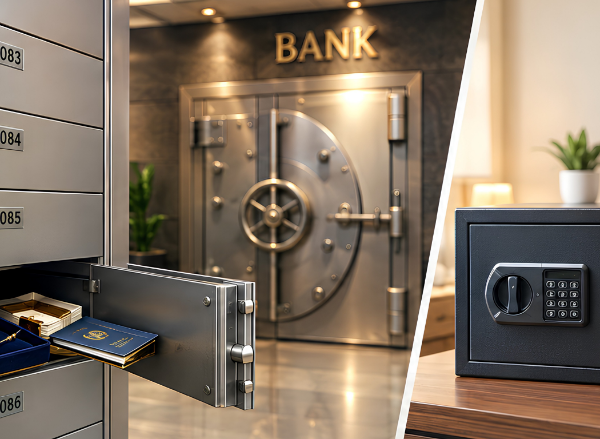
A locker in a bank is a secure, individually lockable steel compartment housed within a bank’s vault, rented out to customers to store valuables - jewellery, documents, cash, or other small high-value items. Lockers in banks are typically organised in a bank of lockers - rows of individually numbered, lockable boxes inside a reinforced vault room.
Access requires visiting the branch, verifying identity, and in most systems, using two keys together - one held by the customer and one by the bank - to open the individual locker.
How Does a Bank Locker System Work?
A bank locker system generally works like this:
1. You rent a locker of a chosen size at a branch, usually with an annual fee.
2. The bank issues you a key or access credential to your specific safe deposit locker.
3. To access it, you visit the branch during banking hours, verify your identity, and the locker is opened jointly - often with your key and a bank-held master key or through a dual-authentication process.
4. You place or remove items in a private access area, then the locker is resealed.
The entire bank locker vault - the room housing all individual lockers - is itself secured with reinforced construction and a vault door, similar in principle to a strong room.
What Can Be Stored in a Bank Locker?
Common items stored in bank lockers include gold and jewellery, property documents, insurance papers, fixed deposit receipts, wills, and sometimes cash - though banks often place restrictions or discourage storing large amounts of cash, and typically don’t permit hazardous, illegal, or perishable items.
Are Bank Lockers Safe?
Bank lockers are a secure option for storing valuables, with the added protection of a bank’s controlled access, surveillance and physical security infrastructure.
The choice between a bank locker and a home safe depends on your needs. A bank locker is suitable for valuables that you rarely need to access, while a home safe is more convenient for valuables you need to keep protected and readily accessible at home.
Both serve different purposes—the right choice depends on how frequently you need access and where you want your valuables stored.
Bank Locker vs Home Safe
|
Factor |
Bank Locker |
Home Safe |
|
Access hours |
Limited to banking hours |
24/7 |
|
Convenience |
Requires travel to branch |
Immediate, at home |
|
Recurring cost |
Annual rental fee |
One-time purchase cost |
|
Security infrastructure |
Backed by full bank vault and security systems |
Depends entirely on the safe and its installation |
|
Best suited for |
Items accessed rarely |
Items needed frequently, or as a supplement to a bank locker |
Bank Locker Dimensions and Sizes
Bank lockers typically come in a range of sizes to suit different storage needs, from a few jewellery items to bulkier document storage. Bank locker dimensions vary between banks and branches, so it’s best to check directly with your bank for their specific size options and corresponding rental fees.
Bank Locker Vaults and Security
The bank locker vault - sometimes referred to as vaults in banks - is built to the same general security principles as a strong room: reinforced walls, a heavy vault door, and layered access control. Individual lockers sit within this larger secured room, meaning your locker’s security depends both on its own lock and on the vault housing it.
Safe Deposit Lockers
A safe deposit or safety deposit locker is essentially the formal name for what most people simply call a bank locker. The terms safe-deposit and deposit locker are used interchangeably across most Indian banks. For those specifically looking at storage outside of a bank branch, a safe deposit locker for home typically refers to a home safe, though it functions as a standalone unit rather than being housed within a bank’s vault infrastructure.
Jewellery Storage Options
Beyond a traditional bank locker, households also consider:
• A home safe kept at home for frequently accessed items
• A biometric home safe for quicker, keyless access
• A combination approach - high-value or rarely used pieces in a bank locker, everyday jewellery in a home safe
Advantages and Limitations of Bank Lockers
Advantages: - Backed by the bank’s overall security infrastructure - Removes the item from your home entirely, reducing home burglary risk - Generally well-suited for rarely accessed valuables
Limitations: - Access restricted to banking hours - Requires physical travel to the branch every time - Contents typically not automatically insured - verify current terms with your bank - Annual rental cost adds up over time - Limited immediate access during emergencies
Important Things Customers Should Know Before Choosing a Locker
• Confirm your bank’s current policy on liability and insurance coverage for locker contents, since rules can change
• Ask about locker size options and corresponding fees before committing
• Understand the access process - some banks require advance notice or specific hours
• Keep a personal inventory or list of what you’ve stored, since the bank generally won’t know your locker’s contents
• Consider whether a home safe better complements your access needs, particularly for items you use often
FAQs
What is a locker in a bank? A bank locker is an individually lockable steel compartment inside a bank’s secure vault, rented to customers for storing valuables like jewellery, documents, and other high-value items.
Are bank lockers safe? Bank lockers are generally considered secure since they’re housed within a reinforced bank vault with layered security. However, contents are often not automatically insured by the bank, so it’s important to confirm current liability and insurance terms directly with your bank.
What is a safe deposit locker? A safe deposit locker (also called a safety deposit locker) is another name for a standard bank locker, a rented, secure compartment within a bank’s vault used to store valuables and documents.
Is a home safe better than a bank locker? Neither is universally “better” - a home safe offers 24/7 access and no recurring rental fee, while a bank locker offers the backing of a bank’s full vault security infrastructure. Many households use both: a bank locker for rarely accessed valuables, and a home safe for items they need more regularly