STEELAGE BLOGS
Thu 1st October 2026
Biometric Safe Explained: How Fingerprint Safes Work and What to Check Before Buying
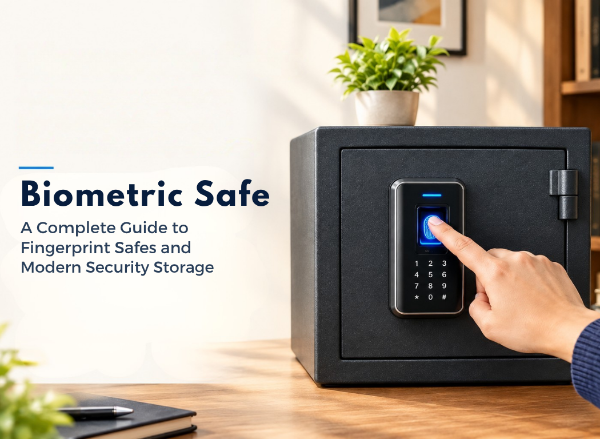
Biometric Safe: A Complete Guide to Fingerprint Safes and Modern Security Storage
Keys get lost. Combinations get forgotten. That’s the simple problem a biometric safe solves - your fingerprint becomes the key, and it’s not something you can misplace. As biometric technology has become more affordable and reliable, fingerprint locks have moved from high-end commercial vaults into everyday home and office safes.
This guide covers how biometric safes work, what to evaluate before buying one, and how they stack up against pin based electronic and traditional key-lock safes.
What Is a Biometric Safe?
A biometric safe is a security safe that uses a fingerprint scanner as its primary - or one of its - unlocking methods, instead of relying solely on a physical key or a numeric combination. What is a biometric safe in simplest terms: it’s a safe locker where your registered fingerprint, rather than a key or code, grants access.
Most models on the market also include a backup key lock or PIN based lock as a secondary access method, which is worth having for situations where the fingerprint scanner has trouble reading a print.
How Does a Fingerprint Safe Work?
A fingerprint safe uses a sensor to capture the unique ridge pattern of a registered finger. When you place your finger on the scanner, it reads and stores the fingerprints in the device’s internal memory. If it matches a registered print, the locking mechanism releases; if not, access is denied.
This process typically takes a second or two, and most units allow multiple users to register their fingerprints, useful for households or offices where more than one person needs access.
Benefits of Biometric Safes
• Faster access - generally quicker than dialling a combination
• Multi-user support - several fingerprints can usually be registered
• Harder to duplicate - unlike a key, a fingerprint can’t easily be copied or handed to someone else accidentally
Audit trail – records access activity, helping you keep track of when the safe was opened and by whom
Battery backup – provides continued access even when the primary power source is unavailable, depending on the model
Duress alarm – a discreet duress function can trigger an alert when access is being made under threat
Automatic SMS and voice alerts – in an emergency, supported models can automatically send an SMS and place a voice call to designated contacts
Biometric vs Key-Lock vs Electronic Digital Safes
|
Feature |
Key-Lock Safe |
Digital (PIN) Safe |
Biometric Safe |
|
Access method |
Physical key |
Numeric code |
Fingerprint |
|
Risk of lockout |
Lost key |
Forgotten code |
Scanner malfunction (usually has backup) |
|
Speed of access |
Moderate |
Moderate |
Fast |
|
Shareable access |
Yes, by handing over the key |
Yes, by sharing the code |
Requires registering each user’s fingerprint |
|
Power dependency |
None |
Battery required |
Battery required |
|
Audit Trail |
No |
No |
Yes |
|
Duress Alarm |
No |
No |
Yes |
Biometric Home Safes
A biometric home safe is well suited to households that want quick, individual access without managing multiple keys - especially useful for couples or families where more than one person needs to open the safe independently. It’s a strong fit for daily-use jewellery, documents, and cash that family members need to access.
Biometric Safes for Offices
In an office setting, a biometric security safe helps solve a common workplace problem - shared safes that multiple employees need to access, without everyone needing to know a shared combination or hold a duplicate key. Each authorised employee can be registered individually, and some models offer audit logs, useful for accountability.
Manufacturers like Steelage, which produce a range of safes, lockers, and office storage equipment, offer biometric locking options within their broader safe and locker range - worth comparing against other security-safe suppliers based on your office’s specific access needs.
Security Features Buyers Should Evaluate
When comparing biometric safe lock options, look beyond just the fingerprint feature:
• Overall body construction (barrier material, locking bolts)
• Fire resistance, if documents are a priority alongside security
Burglary Resistance
• Number of fingerprints the electronic lock can store
• Backup access method (key or PIN)
• Battery life and low-battery warning system
• Whether the biometric module itself is tamper-resistant
What Happens If the Fingerprint Scanner Does Not Work?
This is a genuinely important practical question. Fingerprint scanners can occasionally fail to read a print due to dirt, moisture, dryness, or minor injuries to the finger. Reliable biometric safes address this with:
• A backup mechanical key
• A backup PIN code entry
• Multiple registered fingerprints per user (e.g., both thumbs) as a practical workaround
Before relying on a biometric safe for anything critical, it’s worth testing the backup access method at least once, so you’re not discovering it doesn’t work during an actual emergency.
Battery and Emergency Access Considerations
Biometric and pin based electronic locks run on batteries, and a dead battery shouldn’t mean permanent lockout. Look for models with:
• Low-battery warning indicators well before failure
• An external emergency power port (often a 9V battery contact point) to temporarily power the unit for access
• A mechanical key override as an ultimate backup
How to Maintain a Biometric Safe
• Keep the fingerprint scanner surface clean and free of dust or residue
• Replace batteries proactively rather than waiting for a failure warning
• Periodically re-test all registered fingerprints, especially after software or firmware updates
• Avoid exposing the safe to excess moisture, which can affect both the electronics and the steel body over time
• Keep the backup key stored securely but separately from the safe itself
How to Choose a Reliable Safe Manufacturer
When comparing safe manufacturers in India, look at:
• Years of experience and range of products (home, office, biometric, fire-resistant)
• Whether products carry independent testing or BIS certification
• After-sales service availability, particularly for electronic and biometric components
• Customer reviews and reputation, including how they handle warranty issues
There are several established Indian manufacturers in this space - including Steelage India Private Ltd., which manufactures safes, lockers, and other physical security products with BIS certification. There’s no single objectively “best” brand for every buyer; the right fit depends on your specific security and budget requirements.
Factors Affecting Biometric Safe Prices
1. Biometric lock advanced features
2. Body construction - Barrier material and burglary resistance
3. Fire resistance, if included
4. Capacity and size
5. Number of supported fingerprint users
6. Brand and after-sales support
FAQs
What is a biometric safe? A biometric safe is a security safe that uses a fingerprint electronic lock as its main access method, allowing registered users to unlock it without a key or combination code.
Are fingerprint safes secure? Yes, generally - fingerprints are difficult to duplicate, making biometric locks a strong access-control method.
Is a biometric safe good for home use? Yes, biometric safes work well for home use, especially in households where multiple family members need independent, quick access without managing shared keys or codes.
What happens if the fingerprint reader fails? Most reliable biometric safes include a backup key or PIN code as a secondary access method, so a fingerprint lock malfunction doesn’t result in permanent lockout. It’s worth testing this backup method after purchase.