STEELAGE BLOGS
Mon 1st June 2026
Bank Locker vs Home Safe: Which Is More Secure for Your Valuables?
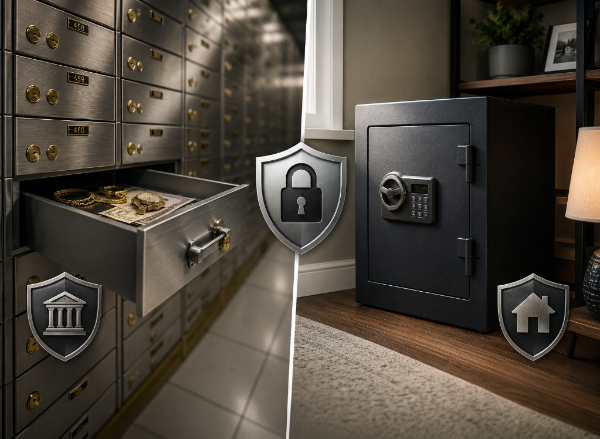
Which is better: a bank locker or a home safe?
A bank locker provides professionally managed storage in a secure banking environment, while a home safe offers immediate access and convenience. For many users, the best approach is to use both—keeping everyday valuables in a certified home safe and storing rarely accessed, high-value items in a bank locker.
Introduction
Protecting valuable assets such as jewellery, cash, important documents, and family heirlooms is a priority for homeowners and businesses alike. One of the most common questions people ask is whether they should rely on a bank locker or invest in a home safe.
Both options provide security, but they serve different purposes. A bank locker offers protection within a controlled financial institution, whereas a home safe provides immediate access and convenience. Understanding their strengths and limitations helps you make an informed decision based on your lifestyle, business needs, and security requirements.
This guide compares bank lockers and home safes across security, accessibility, cost, convenience, and long-term value to help you choose the right solution.
Bank Locker: Advantages
Bank lockers have been trusted for decades because they are housed within secure banking premises.
Benefits
- Multiple layers of physical security
- CCTV surveillance
- Controlled access procedures
- Professional monitoring
- Suitable for long-term storage of valuables
These features make bank lockers ideal for storing jewellery, important legal documents, family heirlooms, and investment assets that do not require frequent access.
Limitations of Bank Lockers
Although secure, bank lockers have certain drawbacks.
Limited Accessibility
Access is available only during banking hours, which may be inconvenient during emergencies or holidays.
Annual Rental Charges
Most banks charge recurring locker rental fees, increasing the long-term cost of ownership.
Limited Availability
Due to high demand, lockers may not always be available immediately.
Travel Time
Every visit requires travelling to the bank, making frequent access less convenient.
Home Safe: Advantages
Modern home safes have evolved significantly and now offer advanced security features comparable to commercial-grade storage solutions.
Immediate Access
A home safe allows you to access valuables whenever needed without depending on bank operating hours.
Fire Protection
Many modern safes include fire-resistant construction that helps protect jewellery, documents, and cash during fire incidents.
Advanced Locking Systems
Options include:
- Digital keypad locks
- Biometric fingerprint locks
- Dual-control locks
- Mechanical combination locks
Cost Efficiency
Although purchasing a quality safe requires an upfront investment, it eliminates recurring annual locker fees.
Limitations of Home Safes
Home safes require proper installation and maintenance.
Potential considerations include:
- Professional anchoring is essential.
- Electronic locks require battery replacement.
- Safe placement should remain discreet.
- Regular servicing helps maintain optimal performance.
Choosing a certified, professionally installed safe significantly reduces these risks.
Comparison Table
|
Feature |
Bank Locker |
Home Safe |
|
Accessibility |
Banking hours only |
24/7 access |
|
Fire Protection |
Bank dependent |
Available in fire-resistant models |
|
Burglary Protection |
High |
High (with certified safes) |
|
Annual Cost |
Rental charges |
One-time purchase |
|
Convenience |
Moderate |
Excellent |
|
Privacy |
Shared facility |
Complete personal control |
|
Installation |
Not required |
Professional installation recommended |
Which Option is Better for Jewellery Retailers?
Jewellery retailers often require immediate access to inventory while maintaining high levels of protection.
A professionally installed fire-resistant commercial safe provides:
- Faster business operations
- Secure overnight storage
- Better inventory organization
- Integration with CCTV and alarm systems
- Reduced dependency on bank operating hours
For very high-value inventory or archival assets, a hybrid approach—using both a commercial safe and a bank locker—can offer additional flexibility.
Best Practices
- Install certified fire-resistant safes.
- Restrict access to authorized personnel.
- Change access codes regularly.
- Integrate safes with surveillance and alarm systems.
- Store infrequently used valuables in bank lockers if appropriate.
- Review insurance requirements for high-value assets.
Should you choose a bank locker or a home safe?
If you require frequent access to valuables, a certified home safe is generally more practical. If your valuables are rarely accessed and you prefer storage within a banking environment, a bank locker may be suitable. Many users benefit from combining both options to balance convenience and security.
Is a home safe safer than a bank locker?
Both offer strong security when used appropriately. A certified, professionally installed home safe provides convenient protection, while a bank locker offers institutional security for long-term storage.
Can jewellery be stored in a home safe?
Yes. Fire-resistant, burglary-resistant safes are designed to protect jewellery, documents, and cash.
Are digital safes reliable?
Modern digital safes are reliable when maintained properly and sourced from reputable manufacturers.
Should a home safe be bolted down?
Yes. Anchoring the safe improves security by reducing the risk of unauthorized removal.
Is it worth buying a home safe?
For users who require regular access to valuables, a home safe offers convenience, long-term value, and enhanced control over security.